The Future of Beauty: How to Launch a Profitable AI Hairstyle Try-On Kiosk Business
Introduction
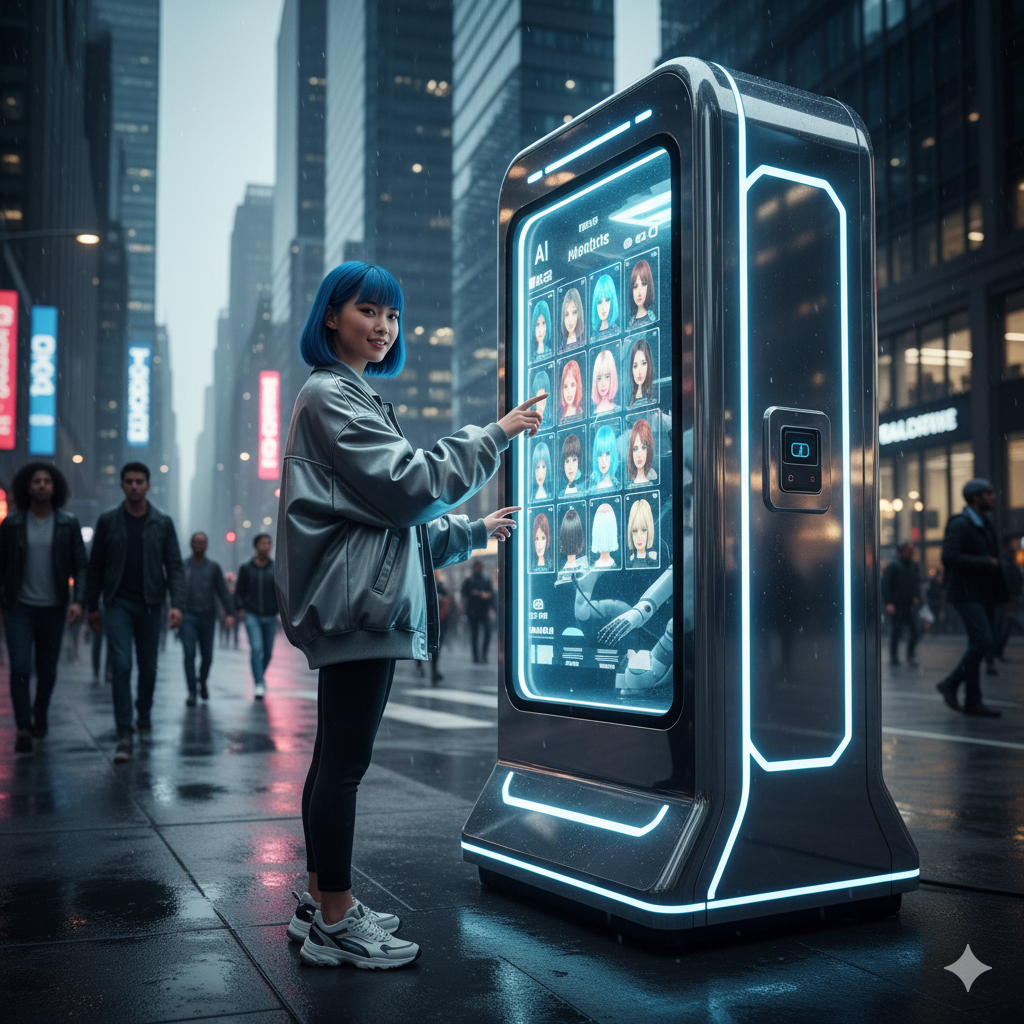
Imagine walking through a bustling shopping mall and seeing a sleek, futuristic kiosk. A potential customer steps up, and within seconds, their reflection in the mirror-like screen transforms, showcasing a dozen different hairstyles—from a chic bob to long, vibrant waves. They smile, confident in their choice for a new look, and even get recommendations for the perfect products to maintain it. This isn’t a scene from a sci-fi movie; it’s the reality of Augmented Reality (AR) and Artificial Intelligence (AI) in the beauty industry. For savvy freelancers and entrepreneurs, this technology presents a golden opportunity: the AI Hairstyle Try-On Kiosk Business. This comprehensive guide will explore every facet of this innovative venture, from sourcing the technology to mapping out a profitable business model and achieving a high return on investment.
Stylish Text to Font Create Beautiful Text
What Exactly is an AI Hairstyle Try-On Kiosk?
An AI Hairstyle Try-On Kiosk is an interactive, self-service station that uses a combination of cutting-edge technologies to offer users a virtual preview of different hairstyles and colors. At its core, it functions like a “smart mirror.”
- Artificial Intelligence (AI): The kiosk uses AI algorithms to analyze a user’s facial structure, hair type, and even skin tone.[1][2] This allows it to suggest styles that would be the most flattering.[1][2]
- Augmented Reality (AR): AR technology overlays the virtual hairstyles onto the user’s real-time image on the screen.[3] This creates a seamless and realistic simulation, allowing users to turn their heads and see the new ‘do from various angles.
- Generative Adversarial Networks (GAN): More advanced kiosks use GAN technology to realistically recreate parts of the user’s head, neck, and shoulders, which is especially important when simulating shorter haircuts.[4]
From the user’s perspective, the process is simple and engaging. They stand before the kiosk, the camera captures their image, and they can browse a vast library of styles and colors with a few taps on the touchscreen.[5] This technology effectively removes the fear and uncertainty associated with getting a new haircut, a major pain point for consumers.[6]
The Untapped Market: Why the AI Hairstyle Try-On Kiosk Business is a Goldmine
The global beauty industry is a massive market, and it’s rapidly integrating technology to enhance the customer experience.[7] The demand for personalization is at an all-time high, and an AI Hairstyle Try-On Kiosk Business directly caters to this trend.[8][9]
Benefits for Consumers:
- Risk-Free Experimentation: Customers can try dozens of looks without any commitment, boosting their confidence before visiting a salon.[4]
- Personalized Recommendations: AI-driven suggestions help users discover styles they may not have considered.
- Convenience and Fun: The interactive and game-like nature of the experience makes it highly engaging.[8]
Benefits for Partner Businesses (Salons, Retailers):
- Increased Customer Engagement: Kiosks attract foot traffic and keep customers engaged with a brand’s offerings. Studies have shown that AR try-on features dramatically increase the time spent on a company’s website or in-store.[10]
- Higher Conversion Rates: When customers are confident about a new look, they are more likely to book an appointment or purchase a product. Tarte Cosmetics, for example, saw a 200% increase in sales after introducing a virtual makeup try-on feature.[10]
- Reduced Product Returns: By allowing virtual testing, the rate of product returns can be significantly lowered.[8]
This convergence of consumer demand and business benefits makes the AI Hairstyle Try-On Kiosk Business a lucrative venture poised for explosive growth. The market for AR in the beauty sector is projected to expand at a compound annual growth rate (CAGR) of 25.5% between 2022 and 2027.[3][8]
Sourcing Your Kiosk: Where to Buy and What to Consider
Finding the right hardware and software is the first practical step. While a single, off-the-shelf “hairstyle kiosk” isn’t as common as an ATM, several tech companies provide the necessary components, which can be integrated into a kiosk setup.
Key Technology Providers:
- Perfect Corp.: A leader in AR and AI beauty tech, Perfect Corp. offers a comprehensive “Virtual Hairstyle Try-On” solution that can be integrated into mobile apps, websites, and in-store kiosks.[4][6][11] They provide a ready-made API, making integration seamless for businesses.[12]
- ModiFace Inc.: Acquired by L’Oréal, ModiFace specializes in realistic AR and AI integrations for the beauty industry and powers many high-profile brands.[11]
- Piiq Digital: This company offers a “Smart Mirror” specifically designed for hair salons, which includes AI-powered hair analysis and personalized recommendations.[13][14] Their model is often based on a monthly subscription, which includes the hardware.[14]
- White-Label SDK Providers: Companies like Banuba GmbH offer robust Software Development Kits (SDKs) that allow you to build a custom application with their AR technology.[5][11]
Where to Look:
- Directly Contact Tech Companies: Reach out to the sales departments of companies like Perfect Corp. or Piiq Digital to inquire about their solutions for standalone kiosks.
- B2B Marketplaces: Websites like Alibaba may feature manufacturers of smart mirrors or interactive kiosks. Be sure to vet suppliers carefully for quality and software reliability.
- Kiosk Manufacturers: Companies that build custom kiosks (like those used for ticketing or information) can create the physical housing for a screen, camera, and computer running the specialized AR software.
Estimated Cost:
The cost can vary significantly. A monthly subscription for a salon-based smart mirror like Piiq might be a few hundred dollars.[14] Purchasing a custom-built kiosk with licensed software could range from $5,000 to $25,000+ per unit, depending on screen size, build quality, and software features. Software licensing may be an ongoing operational cost.
Launching Your AI Hairstyle Try-On Kiosk Business: A Step-by-Step Business
A successful business requires more than just good technology. You need a solid business model and a strategic plan.
1. Choose Your Business Model:
- Pay-Per-Use: Place kiosks in high-traffic public areas like shopping malls, airports, or university campuses. Charge a small fee (e.g., 5) for a session where users can try unlimited styles and get digital copies of their favorites.
- Leasing/Sales to Salons: Partner with hair salons and barbershops. Lease or sell the kiosks to them as a premium consultation tool.[15] Salons can use it to upsell services, improve client satisfaction, and sell more retail products.[14]
- Retail Partnerships: Collaborate with large beauty retailers like Sephora or Ulta.[8] The kiosk can be used to promote specific hair care products or color lines, with the retailer paying a monthly fee or a commission on sales driven by the kiosk. Sally Beauty has already done this successfully with their “ColorView” kiosks.[16][17]
- Advertising Revenue: Sell advertising space on the kiosk’s screen to complementary, non-competing brands.
2. Strategic Locations for Installation:
The right location is crucial for maximizing visibility and profit.
- Shopping Malls: The ultimate location for foot traffic and impulse engagement.[18]
- Beauty Supply Stores: Target customers who are already in the mindset of changing their look.
- Airports: A captive audience with time to spare.
- University Campuses: Young, tech-savvy demographics who are open to experimentation.
- Beauty Expos and Trade Shows: Showcase the technology to industry professionals, generating leads for your salon leasing model.
3. Profitability and ROI:
Your profit potential depends on your business model.
- Pay-Per-Use Example: In a mall with steady foot traffic, if a kiosk facilitates just 30 paid sessions per day at $3 each, that’s $90 per day, or roughly $2,700 per month. After deducting location rental fees and maintenance, a single kiosk can become profitable within 6-12 months.[19]
- Leasing Example: Leasing a smart mirror to a salon for $300/month provides a steady, recurring revenue stream. With 10 salon clients, you’re generating $3,000 monthly.
Revenue can be further boosted by earning commissions on hair product sales recommended by the kiosk’s AI.[15]
The Technology Deep Dive: Features, Functions, and Operation
Understanding the kiosk’s capabilities is key to marketing it effectively.
Core Functions:
- Vast Hairstyle Library: Offer a wide range of styles—short, long, curly, straight, updos, and options for both men and women.[4][5]
- Realistic Hair Color Simulation: Allow users to try everything from natural shades to bold, fantasy colors.
- 360-Degree Viewing: Users should be able to see the style from all angles as they move their head.
Advanced Features for a Premium Experience:
- Face Shape Analysis: The AI detects the user’s face shape (oval, round, square, etc.) and recommends the most flattering cuts.
- Hair Health Diagnostics: Some smart mirrors can analyze hair condition from a photo and recommend specific treatments or products.[13]
- Social Sharing: Allow users to instantly share their virtual makeovers on social media, creating organic marketing for your business.
- “Before and After” Comparison: A simple but powerful feature that helps users see the impact of the change.[4]
Operational Needs:
- Power: A standard electrical outlet is usually sufficient.
- Internet Connectivity: A stable Wi-Fi or cellular connection is essential for software updates, remote management, and analytics tracking.[14]
- Maintenance: This includes regular cleaning of the screen and ensuring the camera is unobstructed. Remote software support from your technology provider is also critical.
Hashtags and Social Media Titles for Promotion
To market your AI Hairstyle Try-On Kiosk Business, use engaging and trending social media content.
Engaging Titles:
- “Find Your Perfect Hairstyle in 60 Seconds! ✨ #FutureOfBeauty”
- “Don’t Just Dream of a New Look, Try It! Our AI Kiosk is Here.”
- “The Ultimate Hairstyle Preview is in Your Local Mall! #AIHairstyle”
Relevant Hashtags:
#AIHairstyle #VirtualTryOn #ARBeauty #SmartMirror #BeautyTech #HairSalonTech #FutureOfBeauty #HairstyleTransformation #AIHairstyleTryOnKioskBusiness #SalonBusiness #EntrepreneurLife #TechStartup
Frequently Asked Questions (FAQs)
1. How much does an AI Hairstyle Try-On Kiosk cost?
The hardware and software can range from a few hundred dollars a month for a subscription service to over $25,000 for a custom-built kiosk.
2. Is the technology difficult to maintain?
Physical maintenance is minimal (cleaning). Most software support and updates can be handled remotely by the technology provider, requiring only a stable internet connection.
3. How does the AI Hairstyle Try-On Kiosk Business make money?
Revenue can be generated through pay-per-use fees, leasing the kiosks to salons, partnerships with retailers, and on-screen advertising.
4. What are the best locations to install a kiosk?
High-traffic areas are ideal, including shopping malls, airports, large beauty retail stores, and university campuses.[18]
5. How accurate is the virtual try-on?
Leading providers use advanced AI and AR to deliver hyper-realistic simulations, accurately mapping styles to a user’s head for a true-to-life preview.[4]
6. Can the software be customized with my branding?
Yes, most white-label or B2B solutions allow for custom branding, logos, and user interfaces to match your business or your clients’ branding.
7. Do I need a special license to operate a kiosk?
This depends on your location. You will need a standard business license and a contractual agreement with the property owner where the kiosk is placed (e.g., the mall management).
8. What companies are leaders in this technology?
Perfect Corp., ModiFace Inc., and Piiq Digital are some of the top companies developing the software and hardware for this technology.[11][13]
9. Can these kiosks recommend hair care products?
Absolutely. Many advanced systems can recommend specific products based on the chosen style or an analysis of the user’s hair type, creating an additional revenue stream through commissions.[1][15]
10. What is the future of this technology?
The future includes even greater realism, integration with e-commerce for direct product purchasing, and expansion into other beauty services like virtual makeup and skincare analysis.
Conclusion
The beauty industry is at the forefront of a technological revolution, and the AI Hairstyle Try-On Kiosk Business stands as a testament to this shift. It offers a unique solution to a timeless consumer dilemma while providing multiple pathways to profitability for entrepreneurs and freelancers. By bridging the gap between imagination and reality, this business model enhances customer confidence, drives sales for partner businesses, and creates a fun, memorable experience. For those looking to enter a market with high growth potential and a clear competitive edge, the fusion of AI, AR, and beauty offers an unparalleled opportunity. The future of the salon and beauty retail experience is interactive, personalized, and intelligent—and you can be the one to bring it to the masses.
Sourceshelp