Jelly Beds: The New Viral Sleep Trend from China That’s Breaking the Internet
In the world of sleep innovations, few trends have taken off quite like jelly beds. Yes, you read that right—jelly beds. These squishy, translucent, bouncy mattress-style beds from China are the latest viral sensation sweeping platforms like TikTok, Instagram and Facebook around 2024–2025. They’ve captured the imaginations of home décor enthusiasts, content creators, parents looking for fun kids’ playrooms—and even mattress-curious adults. In this article we’ll dive into what jelly beds are, why they’re going viral, who’s making them (mostly Chinese manufacturers), how people are using them, where you can buy one (with price ranges and shipping/import tips), and what you should know before you leap in.
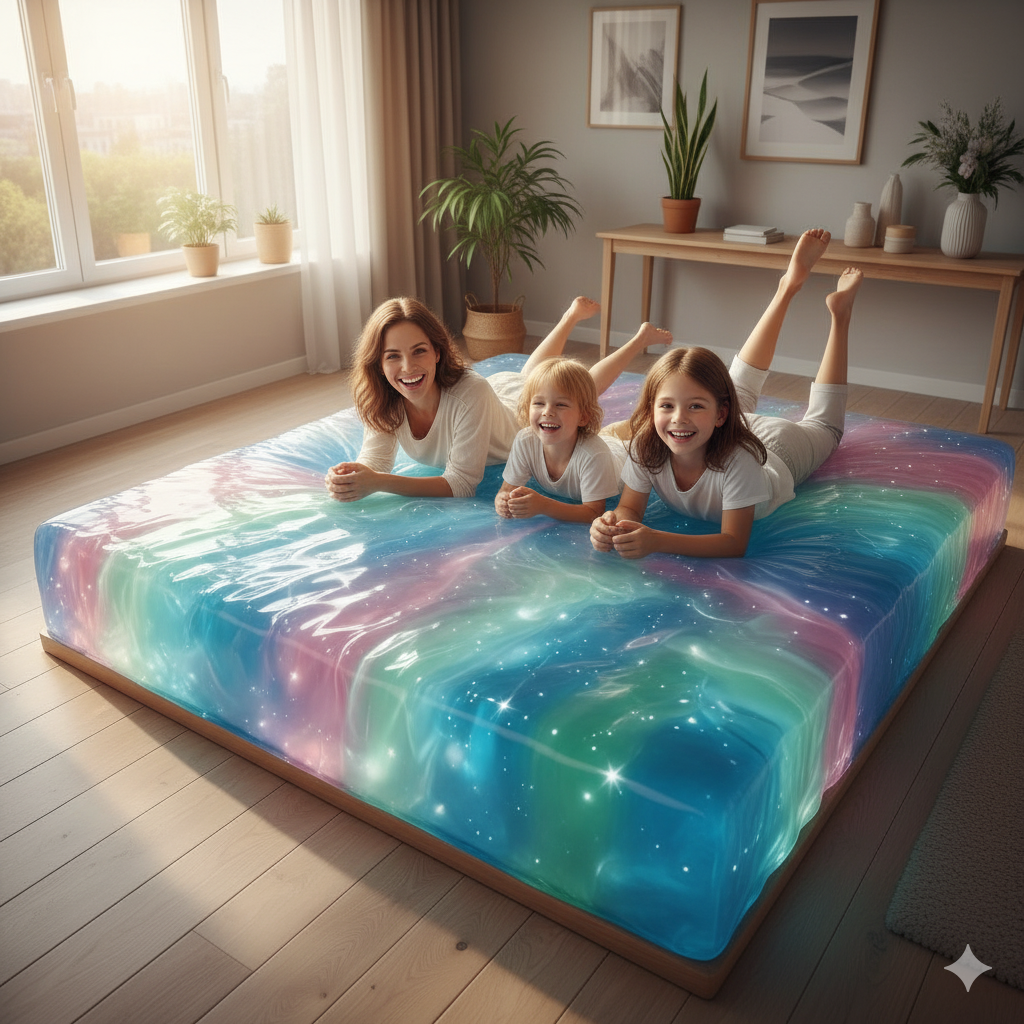
What Are Jelly Beds? – A Closer Look
A jelly bed is essentially a mattress or bed platform made of or filled with a translucent, soft PVC/TPU “jelly” material (or a gel-infused foam mattress with a jelly-look layer) that gives a squishy, bounce-y effect when you lie or jump on it. Many of them are sold under the names “jelly mattress,” “squishy bed,” “gel bed mattress,” or “kids’ jelly bed”. While they share traits with water beds or inflatable mattresses, they differ in texture (softer, more gel-like) and in appearance (often clear or coloured jelly layers).
Chinese manufacturers started producing these types of items and shipping them globally; they’re now appearing in videos where people jump on them, record the bouncy effect, or even use them for photo content. For example, one YouTube short titled “China’s Real Jelly Bed – The Most Comfortable & Cheapest” shows a translucent mattress that wobbles when someone lies on it. youtube.com+1 Jelly Beds: The New Viral Sleep Trend from China That’s Breaking the Internet
Importantly, “jelly bed” is still a fairly new term in Western markets—and there’s not yet a standard definition—but for the purpose of this trend, the phrase refers to these bouncy, semi-transparent, gel-or-PVC-filled beds.
Why Are Jelly Beds Going Viral?
There are a few overlapping reasons why jelly beds have captured attention:
1. Social media & content appeal Jelly Beds: The New Viral Sleep Trend from China That’s Breaking the Internet
Videos of people jumping, bouncing, or diving onto jelly beds get high engagement because of the fun, unexpected wobble or bounce. On Instagram one reel captioned “I think I’m obsessed! I need a jelly bed immediately!” reportedly gathered 990K likes. Instagram On Facebook you’ll find posts titled “Jelly Beds! 😱 #fblifestyle” showing domino-style setups of jelly bed panels. Facebook
These fun visuals make jelly beds shareable—and shareability drives more views, more curiosity, more purchases.
2. Novelty meets home décor
In a time when people are experimenting with bold accent pieces, quirky furniture, and “instagrammable” home setups, jelly beds offer something outside the usual memory-foam mattress or futon. Content creators (for kids rooms, playrooms, influencers) see them as props and functional furniture.

3. Chinese manufacturing + global export
Because many of these items originate in China and are sold through marketplaces that ship internationally, they’ve become accessible and relatively inexpensive compared to some premium mattress brands. That helps their viral momentum—people see them, hear about them, and think “I could get that”.
4. The “try before you sleep” factor Jelly Beds: The New Viral Sleep Trend from China That’s Breaking the Internet
Unlike a traditional mattress where you lie down and maybe shift a little, with a jelly bed you often see people jumping on it, turning off lights and filming the wobble, or using it as a kids’ play trampoline-/mattress hybrid. That “play” aspect adds to the viral appeal.
In short, the combination of visual novelty + social media friendly + affordable importable product = trend ripe for viral spread. Jelly Beds: The New Viral Sleep Trend from China That’s Breaking the Internet
Who’s Making and Selling Jelly Beds?
Chinese manufacturers & wholesale platforms
Many of the jelly bed-style mattresses or gel mattresses/“jelly mattress” variants are being produced in China and listed on B2B platforms:
- On Alibaba you’ll find a “Solid Jelly Mattress” listing (China) with factory pricing starting US $25-45 for smaller volumes. Alibaba
- On Made‑in‑China we see “Cool Gel Memory Foam Mattress” listings from China at US $69-300 FOB. mm.made-in-china.com
These are typically aimed at wholesale or bulk buying (MOQs) rather than single retail consumers—but they show the sourcing origin.
Retail and consumer-facing sellers
For end-users outside China, jelly beds are being sold on international marketplaces such as:
- Temu – the “everything from China” style app where novelty mattresses show up.
- AliExpress – many Chinese sellers list “jelly mattress kids play bed” or “transparent gel bed” with shipping worldwide.
- Amazon – though fewer dedicated “jelly bed” brand names, but you’ll find gel-infused transparent mattress toppers or novelty beds.
- Daraz (for Pakistan and South Asia) – you’ll find “cool gel mattress” listings making their way into the local market. Daraz
So: Chinese manufacturers → global novelty-friendly retailers → end-user market. That pipeline helps the trend spread internationally.
How Are People Using Jelly Beds?
Here are typical use-cases for jelly beds:
- Home bedrooms: Some adventurous sleepers or décor-conscious folks install a jelly bed in place of a regular mattress to get that “wow” factor when guests visit.
- Kids’ playrooms / family rooms: The bounce and wobble make them appealing for kids. They’re used almost like giant indoor play cushions.
- Content creation / influencer setups: Creators film themselves, friends or pets jumping onto them for the visual effect—makes for shareable content.
- Photo-backdrop or chill-zone furniture: The translucent, gel-look surface can become an aesthetic piece in a modern interior.
- Temporary beds / guest beds: Because many jelly beds are less firm and more novelty-oriented, they’re sometimes used for spare rooms or weekend lounging rather than full-time sleeping.
It’s noteworthy that while many people sleep on them, some buyers treat them more like “fun furniture” than a primary mattress. That distinction is important (see pros/cons below).Jelly Beds: The New Viral Sleep Trend from China That’s Breaking the Internet
Price Ranges & Where to Buy
Let’s break this into consumer retail and wholesale/B2B.
Consumer Retail
- On Daraz (Pakistan) “cool gel mattress” listings show prices from Rs 1,392 to Rs 29,450 depending on size and brand. Daraz
- On Amazon/AliExpress you’ll find novelty jelly bed mattresses in the US $200-500 range for full-size versions (though many are marketed under “gel bed mattress” rather than explicitly “jelly bed”). Based on wholesale pricing this seems plausible.
- On Temu you may find discounted entries from US $150-300 for simpler versions, shipping from China.
Typical consumer price range: - Low-end: ~US $150-250
- Mid-range: ~US $300-500
- High-end novelty/large size: US $600+ (especially if shipping/import included)
Wholesale / Import Buyers
- On Alibaba a “solid jelly mattress” factory listing shows US $25-45 per piece for minimum order. Alibaba
- On Made-in-China a “cool gel memory foam mattress” listing shows US $69-300 FOB (factory price) depending on size and features. mm.made-in-china.com
Typical wholesale price range : US $25-300 depending on quantity, size, features, materials.
Shipping / Import Caveats Jelly Beds: The New Viral Sleep Trend from China That’s Breaking the Internet
If you are buying from China and shipping to Pakistan (or any other country), consider:
- Shipping cost: bulky mattress items are heavy and large—shipping or freight may add significant cost.
- Customs/import duties: You may need to pay import tax or GST depending on your country’s rules.
- Delivery time: Standard shipping may take several weeks; expedited will cost more.
- Returns & warranty: Many Chinese sellers accept limited returns; long-distance returns may be impractical.
- Material quality and safety: Verify materials (PVC/TPU gel, fire safety standards, covers, seams) especially if used for kids. Jelly Beds: The New Viral Sleep Trend from China That’s Breaking the Internet
- Sizing & compatibility: Make sure bed size fits your room (king, queen, twin) and local bedding accessories (sheets, frames).
By factoring these, you’ll avoid surprise costs.
Buying Tips: What to Look For
When shopping for a jelly bed (or jelly mattress), here are key features to check:
- Material clarity and durability: Is the “jelly” layer real TPU/PVC gel or just a marketing gimmick? Look for thick seams, durable cover.
- Support and firmness: Novelty‐beds can be soft. If you plan to sleep on it every night, check the underlying support (coils, foam base).
- Cover and hygiene: Removable, washable covers are better—kids and pets might use it.
- Size compatibility: Confirm the size (queen/king) and shipping dimensions.
- Fire/safety certification: Especially for imported mattresses: look for certifications like OEKO-TEX, or flame-retardant labels.
- Shipping/returns policy: For cross‐border buys, understand shipping cost, import duties, and return logistics.
- Customer reviews & viral content: Look at user videos (“jumping on jelly bed”) to check actual performance.
- Frame compatibility: Some standard bed frames may not support unusual mattress thickness or weight distribution of a gel bed.
- Usage intention: Decide if you’re using it for play (kids/guest) or full-time sleep. If full-time sleep, prioritize support and comfort over novelty.
Care & Safety Tips
- Place on a stable frame or floor: Avoid placing jelly mattress on an unstable surface—excessive bounce requires support.
- Use a fitted sheet + protective pad: The jelly surface may be more vulnerable to punctures—use a mattress pad and keep sharp objects away.
- Avoid direct sunlight for long periods: Some PVC/TPU gels can degrade or discolour under UV exposure.
- Check for air/gel leaks: If you feel sudden sagging or “flat” spots, inspect seams for leaks.
- Weight limits: Some jelly beds designed for kids or light use might not support heavy adult loads—check manufacturer specs.
- Ventilate occasionally: Gel or plastic layers may trap heat—venting your mattress occasionally helps with hygiene and temperature.
- Clean covers regularly: Vacuum or spot clean according to cover instructions to prevent dust/mould especially if used for kids.
- Use as intended: If it’s designed for “playroom” use, don’t expect the same longevity or comfort as a premium mattress designed for nightly adult sleep.
Multiple Image Compressor Without Losing HD Quality
Pros & Cons of Jelly Beds
Pros:
- Visually striking and Instagram-friendly—great for social media, kids’ rooms, playrooms.
- Unique tactile feel: bounce, wobble, novel surface that feels different from standard mattress.
- Often lower cost than high-end brand mattresses (for novelty use).
- Many sizes and novelty variations available thanks to Chinese manufacturing and global shipping.
Cons:
- Support may be less than a premium mattress—might not be ideal for nightly adult sleep.
- Durability concerns: Gel or PVC‐fill surfaces may wear faster, sag, or leak.
- Heavier/bulkier shipping than standard foam mattress; import costs can eat into price advantage.
- Fewer established brands and warranties compared to major mattress companies.
- Heating/cooling: Depending on gel or material, may feel warmer or not regulate temperature as well.
- Trend risk: Because it’s novelty, the hype may fade and resale value may drop.
Frequently Asked Questions (FAQs)
1. Are jelly beds safe?
Yes—with caveats. If properly manufactured (good materials, sealed seams, certified covers), a jelly bed can be safe. But always verify fire safety, weight limits, and product reviews especially for kids’ use.
2. How long do jelly beds last?
There is no industry standard yet. However, for novelty usage you might expect 3–5 years with moderate use. For daily adult sleeping, durability may be lower compared to high-end mattresses.
3. Can I sleep on a jelly bed every night?
Yes you can—but only if the model you buy is designed for full nightly use (good base support, robust cover, proper thickness). If it’s marketed mainly as a “play” or “kids’” bed, then nightly adult sleep may lead to quicker wear or lack of comfort.
4. What sizes are available?
Typically twin/single, full/double, queen and king sizes. Check the listing carefully because imported sizes sometimes differ (e.g., China standard vs U.S. standard).
5. Can I buy a jelly bed on Temu/AliExpress from Pakistan?
Yes—many sellers ship globally, including Pakistan. But you will need to check shipping cost, import duties (if any), delivery time, and possible customs clearance. Make sure to buy from a seller with good reviews.
6. How much does a jelly bed cost?
For retail end-users: roughly US $150-250 (low-end), US $300-500 (mid-range), US $600+ (large size/novelty edition). For wholesale/import from Chinese factories: US $25-300 depending on specs. (See sources above.)
7. Are certain brands better than others?
Because the trend is still emerging, many jelly beds are unbranded or generic Chinese factory products. That means brand support may be weaker. If brand matters for warranty, after-sales service, check the seller’s track record.
8. How about cleanup and maintenance?
Good covers should be removable and washable. The gel layer underneath may need spot cleaning only. Avoid sharp objects, keep pets’ nails trimmed, and vacuum or wipe down the surface regularly.
9. Will it fit my existing bed frame or bedding?
Check thickness and base dimensions. If your bed frame has slats with wide gaps, you might need a solid board or bunkie board underneath to avoid sag. Also, fitted sheets for “standard mattresses” may not fit unusual thicknesses—check dimensions.
10. What if it leaks or deflates?
If a seam fails or gel/air escapes, you’ll need to contact the seller. Check whether the seller offers replacement parts or a repair kit. Keep the receipt and photos as evidence.
Conclusion
The jelly bed is more than a meme or social media fad—it’s a globally exportable piece of furniture/design that merges novelty, visual fun and functional sleep furniture. If you’re in the market for something eye-catching in your home, a kids’ playroom upgrade or an influencer-approved piece of décor with a bounce, a jelly bed from China might just fit the bill. Just be sure to check material quality, fit, shipping and your actual usage intentions.
If you’d like help finding current models shipping to Pakistan (or price comparisons on Temu/AliExpress with shipping), I’d be happy to dig those up for you. Check it out and join the viral trend—jelly beds might just change your idea of “bedroom style”.
CTA: Ready to explore jelly beds? Visit Temu or AliExpress, search for “jelly bed mattress” or “transparent gel bed China”, compare shipping to Pakistan, and pick your size. Want the latest updates on this trend? Follow décor-and-viral-furniture channels or message me and I’ll keep you posted.
Pingback: Is Jelly Bed Real or Fake?